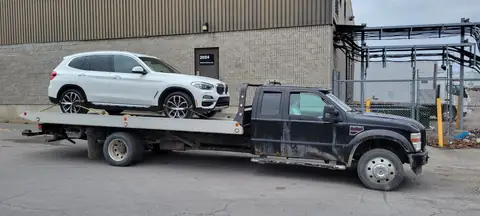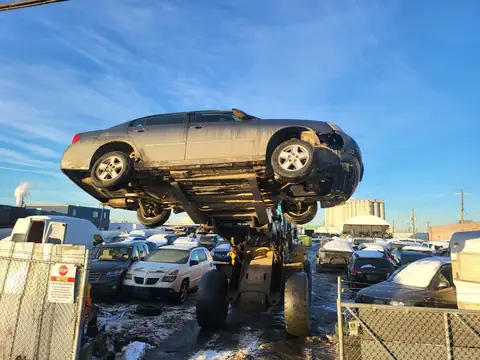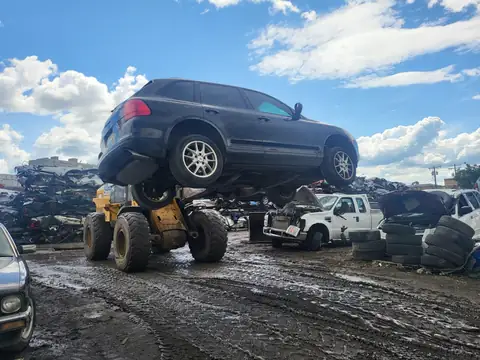
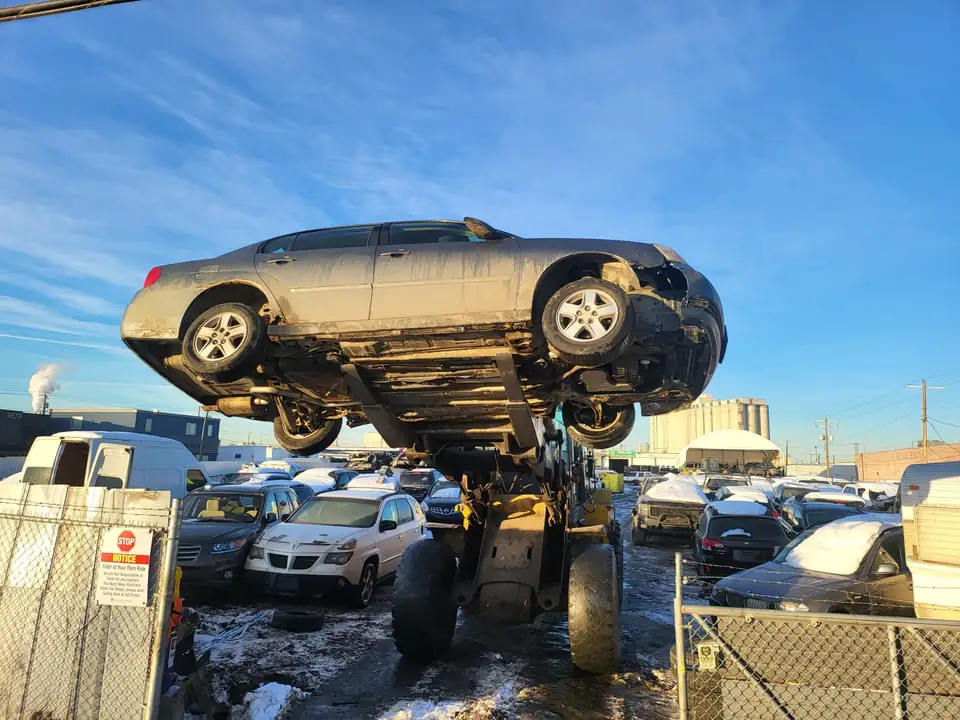
When a car is scrapped in Alberta, it is collected, documented with a bill of sale, then drained of fluids, stripped of its battery, tires and reusable parts, and finally crushed and shredded so the steel and other metals can be recycled. Done properly, very little of the vehicle ends up in a landfill.
In this guide
- Step 1: Pickup and Paperwork
- Step 2: Assessment and Sorting
- Step 3: Depollution
- Step 4: Parts Recovery
- Step 5: Crushing
- Step 6: Shredding and Separation
- Step 7: Back Into Use
- Why This Matters to You as the Seller
- How Long the Whole Process Takes
- A Few Numbers Worth Knowing
- Common Myths About Scrapping
- What Does Not Happen
- How to Tell If a Buyer Handles Vehicles Responsibly
- Scrap, Junk or Damaged: Which Route Is Yours?
- Scrapping Outside Calgary
- The Bottom Line
- Frequently Asked Questions
Most people never see what happens to their car after the tow truck turns the corner. They sign the bill of sale, take the cash and get on with their day. But it is a fair question, and a lot of owners ask it: where does the car actually go, and is it being handled responsibly?
Vehicles are among the most recycled consumer products around. A typical car is mostly steel and iron, with aluminum, copper, plastics, glass and rubber making up the rest. When a vehicle is scrapped properly, most of that material goes back into use. This guide follows a scrap car from your driveway to recycled metal, step by step, and explains why the process matters to you as the seller.
Step 1: Pickup and Paperwork
It starts with a call. You describe the vehicle, get an offer and book a pickup. At AAA, our scrap car removal Calgary service collects the vehicle with a flatbed or winch, depending on its condition, and towing is free on accepted offers.
Before anything is loaded, the paperwork is done:
- Your photo ID is checked against the registration.
- An Alberta bill of sale is completed with the VIN, date and time.
- You are paid at pickup.
- You remove your licence plate, which stays with you in Alberta.
This step is more important than it looks. It is the record that the vehicle is no longer your responsibility. Our documents checklist for Alberta explains what to have ready.
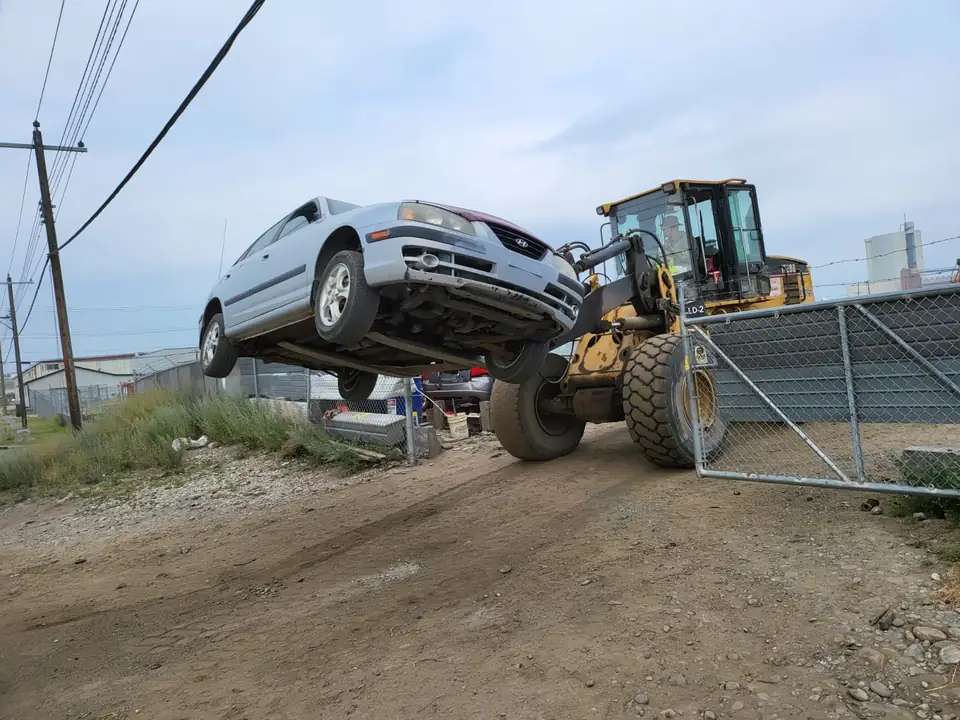
Step 2: Assessment and Sorting
Once the vehicle arrives at a yard or dismantling facility, it is assessed. Is it a complete vehicle with good parts? A junk car that still has a working engine? Or a true end of life shell?
That decision shapes what happens next. Vehicles with useful parts go through dismantling first. Vehicles with nothing left to recover go more directly to depollution and processing.
Step 3: Depollution
This is the step that protects the environment, and it is why choosing a responsible buyer matters.
Before a car can be crushed or shredded, hazardous materials have to be removed:
| Item | What happens to it |
|---|---|
| Engine oil | Drained and collected for recycling or re-refining |
| Coolant | Drained and collected |
| Transmission and brake fluid | Drained and collected |
| Fuel | Removed and handled safely |
| Air conditioning refrigerant | Recovered with proper equipment |
| Battery | Removed and sent for lead acid battery recycling |
| Mercury switches and some sensors | Removed where present |
| Tires | Removed and sent for tire recycling programs |
Alberta has well established recycling programs for tires, used oil and batteries. A car that sits in a yard or field for years without this step can leak fluids into the soil and groundwater. That is one reason it pays to deal with an old vehicle sooner rather than later. Our guide on selling an old truck in Lethbridge touches on this for farm and acreage owners.
Want a real number for your vehicle?
Tell us the year, make, model and condition. Free towing on accepted offers and payment at pickup across Calgary and area.
Step 4: Parts Recovery
Next, anything that can be reused is removed. Depending on the vehicle, that can include:
- Engines and transmissions.
- Alternators, starters and other electrical parts.
- Doors, hoods, fenders and tailgates.
- Glass, mirrors and lights.
- Wheels and rims.
- The catalytic converter, which goes to specialized processors for its precious metals.
Reused parts keep other vehicles on the road at a lower cost and reduce the need to manufacture new parts. This is also why a complete vehicle with good parts is worth more than a stripped one. If you want to understand how that affects your offer, read how much a scrap car is worth in Calgary.
Step 5: Crushing
Once the vehicle has been depolluted and stripped of useful parts, what remains is mostly the body and frame. It is flattened by a crusher so it can be transported efficiently. A flattened car takes up a fraction of the space, which makes shipping it to a shredder much more practical.
Step 6: Shredding and Separation
At a shredding facility, the flattened vehicle is fed into a large shredder that breaks it into small pieces. Then the materials are separated:
- Magnets pull out steel and iron.
- Other separation systems pull out aluminum, copper and other non ferrous metals.
- The remaining material, sometimes called shredder residue, includes plastics, foam, fabric and glass. Some of it can be recovered, and the rest is disposed of.
Step 7: Back Into Use
The separated metals are sold to mills and foundries, where they are melted and made into new products, from rebar and beams to appliances and new vehicles. Recycling steel uses less energy than making it from raw iron ore, which is one of the big environmental benefits of vehicle recycling.
So the car that sat in your driveway for two winters may end up as part of a building, a bridge or another car, possibly one driving down Deerfoot Trail a few years from now.
Why This Matters to You as the Seller
It closes your responsibility
A proper sale with a bill of sale, followed by proper processing, means the vehicle will not turn up abandoned somewhere with your name attached to it.
It is better for your property and neighbourhood
Old vehicles leak. Getting them processed properly protects your yard, your water and your neighbours.
It gets you paid for the materials
The metal and parts in your vehicle have value. That value is why we can pay you for it instead of charging you to take it away.
How Long the Whole Process Takes
From your side, it is quick. The call takes a few minutes, pickup is often possible the same or next day in Calgary, and the paperwork at the door takes a few minutes more. Once the vehicle leaves, your part is done.
At the yard, timing varies. A vehicle with valuable parts may sit in a dismantling area for a while as parts are pulled to order. A bare shell may be depolluted and crushed within days. Shredding happens in batches, when enough flattened vehicles have been collected to make a load worthwhile. None of that affects you as the seller, because you were paid when the car left your property.
A Few Numbers Worth Knowing
You do not need to memorize statistics to sell a car, but a few general facts help explain why scrap vehicles have value:
- Steel and iron make up the largest share of a typical vehicle's weight, which is why weight is the baseline of every scrap price.
- Aluminum is increasingly common in engines, wheels and body panels, especially on newer trucks and SUVs, and it is worth more per kilogram than steel.
- Copper is spread throughout the wiring harness, and a full size vehicle contains a meaningful amount of it.
- Recycled steel can be recycled again and again without losing its strength.
That mix of materials is what turns an old car from a problem into a payment.
Common Myths About Scrapping
"Scrapped cars just go to a landfill." Not when they are handled properly. Most of the vehicle by weight is recovered and recycled.
"I have to pay someone to take my scrap car." Not usually. The materials have value, which is why buyers pay for vehicles and include free towing on accepted offers.
"A car with no engine is worthless." It is worth less, but the body and frame still carry metal value.
"Scrapping is only for wrecked cars." Many scrapped vehicles are simply old, worn out or too expensive to repair, not crashed.
What Does Not Happen
People sometimes worry about a few things:
- Your personal data. Modern cars store phone contacts and navigation history. Before selling, unpair your phone and reset the infotainment system if it still powers on.
- Your personal items. Anything left in the car is gone once it is processed. Check every compartment.
- Your plate. It stays with you in Alberta. See our guide on licence plates after selling a car.
How to Tell If a Buyer Handles Vehicles Responsibly
Ask a few simple questions before you sell:
- Do you complete a bill of sale at pickup?
- Where do the vehicles go after pickup?
- Are fluids, batteries and tires handled through proper recycling?
- Do you check ownership before buying?
A responsible buyer will answer clearly. A buyer who avoids these questions may not be handling the vehicle properly, and that can come back to you.
Scrap, Junk or Damaged: Which Route Is Yours?
Not every old vehicle needs to be scrapped. Some are better sold as junk cars with useful parts. Damaged vehicles that still run may suit our accident damaged car buyer service. Our guide comparing junk car removal and the scrap yard explains the difference, and we always price a vehicle on whichever route pays more.
Scrapping Outside Calgary
The same process applies to vehicles we collect from Red Deer, Lethbridge, Brooks, Drumheller, Banff and Canmore. Farm and acreage vehicles that have sat for years are some of the most important to recycle properly, because they have often been leaking slowly for a long time.
The Bottom Line
Scrapping a car is not the end of its usefulness. A properly scrapped vehicle is collected, documented, drained of fluids, stripped of reusable parts and turned back into steel and other metals. For you, the seller, it means cash in hand, a clean record that the vehicle is no longer yours, and a better outcome for your property and the environment.
When you are ready to scrap a vehicle, contact AAA for a free quote. Learn more about us or explore our main cash for cars Calgary service.
Ready to sell? Get your free cash offer.
One call, one clear offer, free towing on accepted offers and payment at pickup. Prefer writing? Use our contact form.